
🍑 Atlanta GA
Market Overview
Atlanta Real Estate Market Overview:
Atlanta, the capital of Georgia and the state's largest city, is home to a diverse and dynamic real estate market. Known for its Southern charm, robust economy, and thriving cultural scene, Atlanta continues to attract a wide range of residents, contributing to a strong demand for housing.
Market Statistics:
- Population Growth: As of the last census data available in 2021, Atlanta was home to over 500,000 residents within city limits and over 6 million in the larger metropolitan area. By 2023, population estimates suggest a growth rate surpassing the national average.
- Median Home Prices: As of 2023, the median home price in Atlanta is approximately $350,000, showing a steady increase from previous years and indicating a healthy appreciation rate.
- Rental Yield: The median rent in Atlanta is around $1,800 per month, providing an attractive return on investment for rental property investors. Demand for rental properties, especially in areas close to major employers and educational institutions, is consistently strong.
- Vacancy Rate: The vacancy rate in Atlanta is lower than the national average, reflecting a strong demand for housing.
Key Points for Investors:
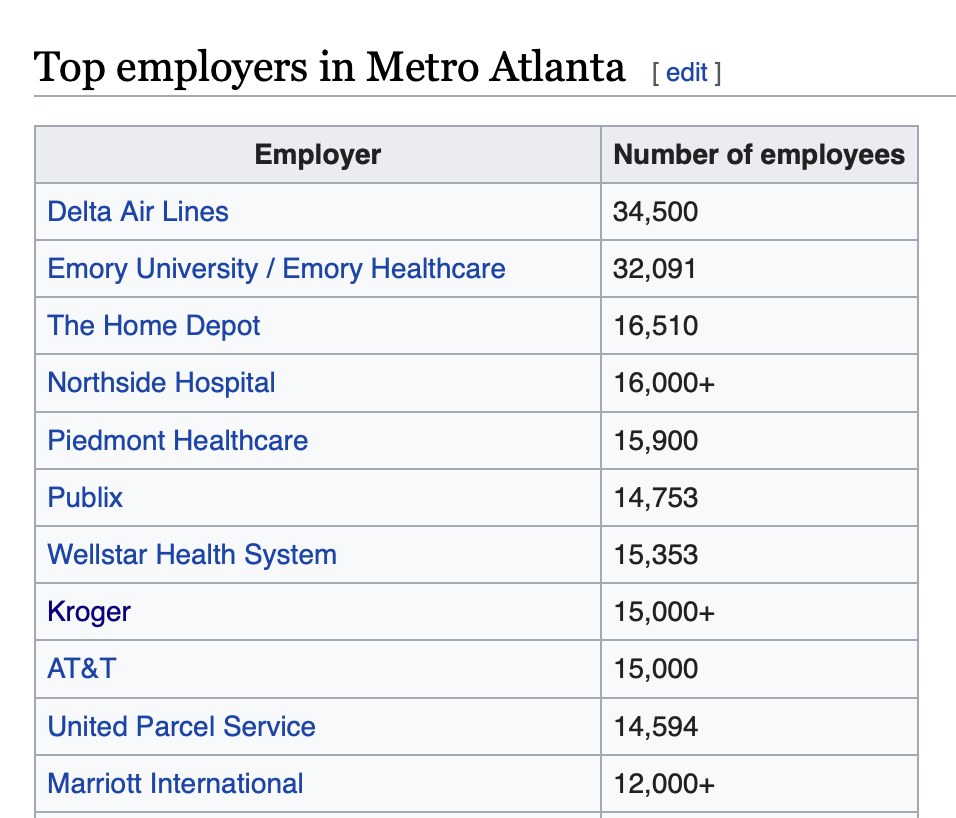
- Economic Stability: Atlanta hosts numerous Fortune 500 companies and is a significant employment hub, which translates into a strong rental demand. Major employers include Delta Air Lines, The Home Depot, UPS, and Coca-Cola, among others.
- Rental Demand: Given Atlanta's status as an education and employment hub, there is strong rental demand. Neighborhoods near universities such as Georgia Tech and Emory University or close to major business districts often have higher rental rates and lower vacancy rates.
- Neighborhood Analysis: Atlanta's neighborhoods each have unique characteristics. From the luxury high-rises in Buckhead to the charming, historic homes in Inman Park, it's crucial for investors to understand these distinctions when choosing where to invest.
- Infrastructure Development: The BeltLine project, a 22-mile loop of multi-use trails, parks, and transit around the city, has increased property values along its path. Future developments and public infrastructure projects can be indicative of potential growth areas.
- Tax Credits: The Georgia Department of Community Affairs offers state tax credits for the rehabilitation of historic properties, potentially providing investors with opportunities to increase their return on investment.
- Lifestyle Amenities: Atlanta's mix of cultural institutions, dining and shopping options, parks, and sports teams make it an attractive place to live and can contribute to strong property values and rental demand.
In conclusion, the Atlanta real estate market shows promising signs for real estate investors, with a strong economy, population growth, and consistent rental demand. However, like any investment, potential investors should conduct thorough research and possibly consult with a local real estate expert before proceeding.
Mapping the City
Google Maps
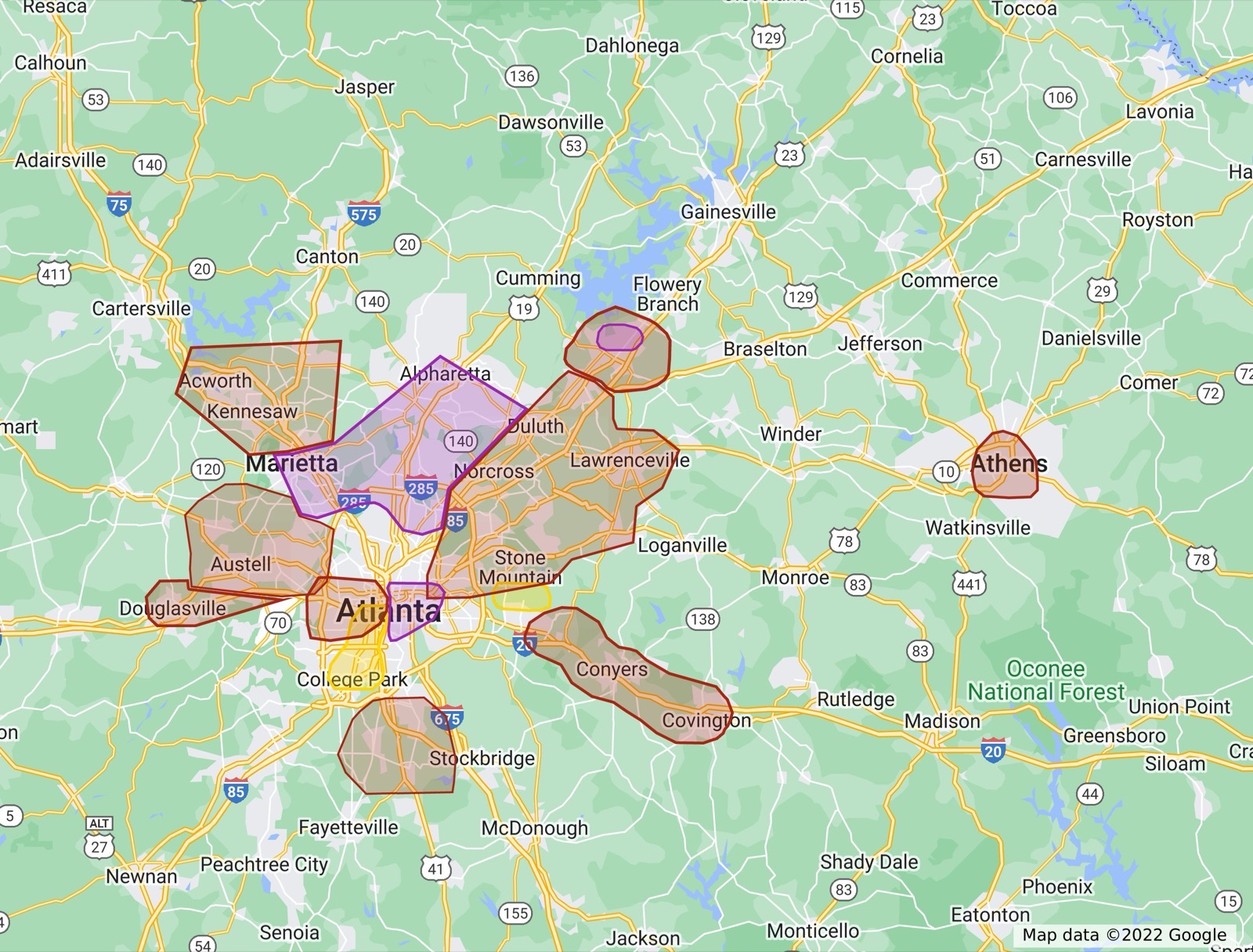
Source: Tony Tran, local Realtor
Purple - Established rich people neighborhoods. Alpharetta, Roswell, Sandy Springs, Brookhaven -- these are what we would call A-class, higher-end neighborhoods with a higher price tag, you would probably be buying here for appreciation with minimal to some cash flow. $$$
Central Red - These are the investor friendly areas, B-class with strong demographics of high population and strong median income, cities in favor for high cash flow with an even balance of appreciation here would be: Norcross, Duluth, Lawrenceville, Lilburn.
Areas such as major metro Marietta is squeezing into A-class territory with surrounding suburbs being B-class. Decatur is so close to downtown Atlanta that it fits in B-class as well for strong appreciation but the premium price tag is not there yet in some areas. $$
Yellow - Cheaper, up-and-coming suburbs. These are still considered B-class areas where population is still as strong as B, but median income may fall short of B-class red areas. Yellow I believe will yield a higher potential appreciation for the reasoning of new development in the area. Stone Mountain being one of them, home to a major Amazon Hub that is 64,000 sqft.
South of Atlanta, we have Morrow, Northern Riverdale, Jonesboro, these areas will be a weaker performer when looking at median income and school ratings, but the cash flow may be the highest.$
Insider Tips
- “Follow the belt line”
- The trend of appreciation is heavily dependent on the school district ratings the property is in.
- New Rivian Plant+ sk innovation.
- Amazon fulfilment centers in Stone Mountain + Duluth
- Major Microsoft Center
- Asian food and groceries in the Northeast part of town
- New construction is largely headed north
- OTP/ITP. Inside the perimeter (285 highway loop) median price is twice as high as outside
- Atlanta doesn’t have as many major natural disasters
Top Employers
The top employers in Atlanta, Georgia, consisted of several multinational corporations, healthcare providers, and local government entities. Here is a list of some of the top employers, although I won't be able to provide specific employee counts as they can fluctuate based on several factors such as the time of year, company changes, and the overall economic climate:
- Delta Air Lines: Delta is one of the largest airlines globally, and their headquarters are located in Atlanta.
- The Home Depot: The Home Depot, the largest home improvement retailer in the U.S., has its corporate headquarters in Atlanta.
- United Parcel Service (UPS): UPS is a multinational shipping & receiving and supply chain management company headquartered in Sandy Springs, a suburb of Atlanta.
- Coca-Cola Company: Coca-Cola is a multinational beverage corporation with its headquarters in Atlanta.
- Emory University & Emory Healthcare: Emory University, one of the leading research universities in the U.S., and its healthcare division is one of the largest employers in the Atlanta area.
- AT&T Mobility: While AT&T is based in Dallas, Texas, its Mobility division has a significant presence in Atlanta.
- Northside Hospital: Northside Hospital is a network of hospitals and medical facilities in the Atlanta metropolitan area.
- WellStar Health System: This health system operates hospitals, urgent care centers, and other healthcare facilities across the Atlanta area.
- City of Atlanta & Fulton County: Government positions, including city, county, and state roles, account for a large number of jobs in Atlanta.
- SunTrust Banks (now Truist Financial): SunTrust, now merged with BB&T to form Truist Financial, is a major banking institution based in Atlanta.
Atlanta Business Chronicle's Book of Lists or the city's Chamber of Commerce.
https://www.youtube.com/watch?v=pwYM8-wEyA0