
🏦 Commercial Financing & Lending
Special Lending for Non-Residential Real Estate
💡 At this point, it would be beneficial to have befriended a few local banks or credit unions who can be more flexible with debt terms.
Owner Operators
Pros, tax advantages & SBA loans
- Depreciation
- Deduct the cost of loan points, closing costs, property tax, operating expenses, and mortgage interest from their taxes.
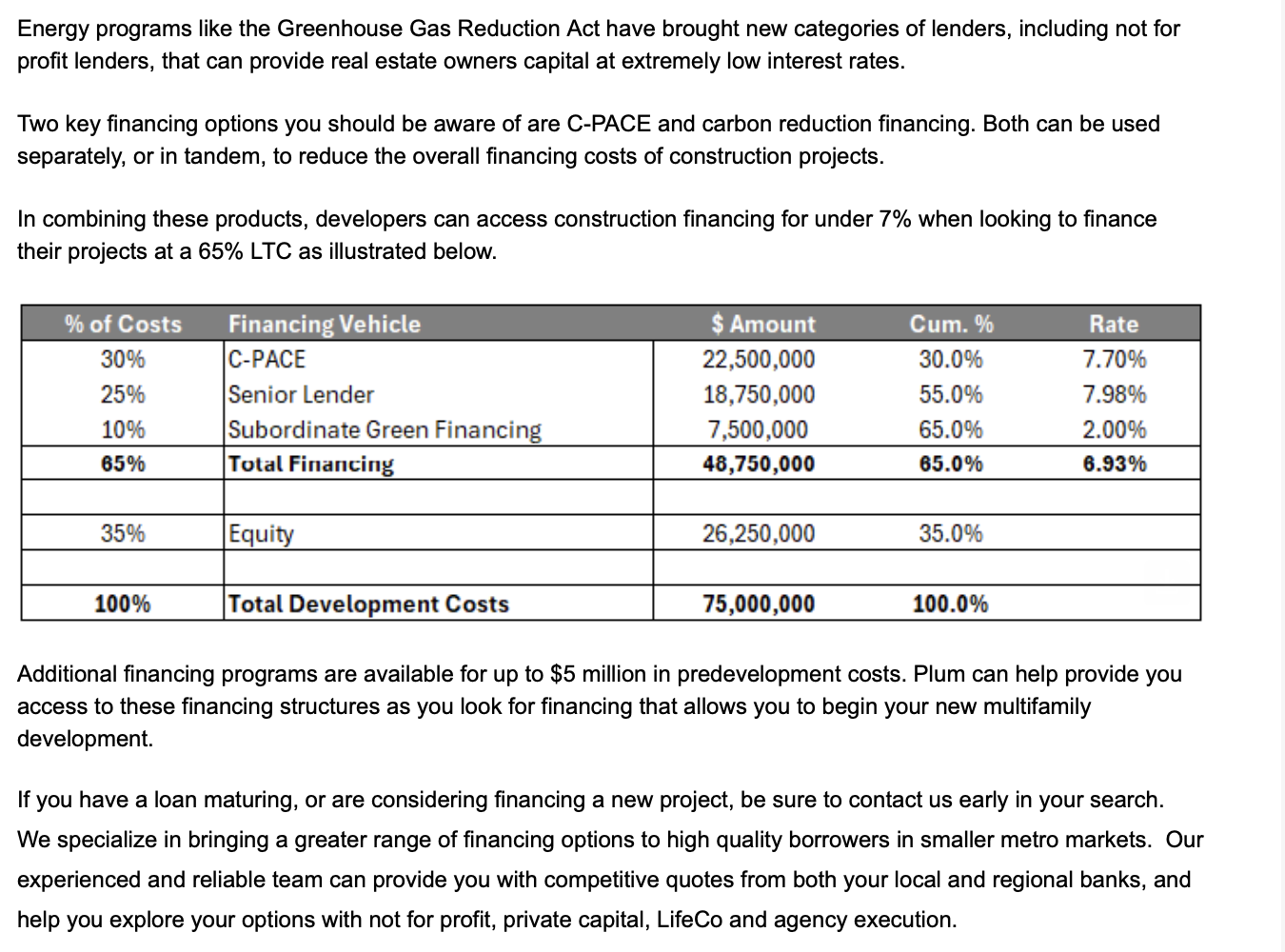
PACE Financing
💡 Lumen.ai is a software that focuses on helping you discover if it’s worth upgrading your building through PACE. Because NNN deals pass on the cost of property taxes to the tenants, this is often a win-win if your tenants can save on the electricity & water bill.
Property Assessed Clean Energy (PACE) financing is a way for property owners to fund energy-efficient and renewable energy improvements without paying upfront. Here’s how it works:
- Financing Energy Upgrades: If you want to install solar panels, upgrade your heating and cooling systems, or make other energy-saving improvements, PACE provides the necessary funds.
- Repayment Through Property Taxes: Instead of a traditional loan with monthly payments, you repay the financing through an additional charge on your property tax bill over a set period, often up to 20 or 30 years. (Pace Nation)
- No Upfront Costs: This structure allows you to start saving on energy bills immediately, as the cost is spread out over time.
- Transferable Upon Sale: If you sell your property before fully repaying the PACE financing, the remaining balance typically transfers to the new owner, since the repayment is tied to the property, not the individual. (Consumer Financial Protection Bureau)
- As of Nov 4, mosts construction loans are ~10%+
By Asset Class
Retail
Lenders will often require an anchor tenant signed before executing loan.
General Finance
By Lance Sallis
Risk Free Rate - determines the premium required on yield and cap rates. Target IRR and leverage are tied together.
10 Year Treasury note is more important for determining real estate debt